10 Apr
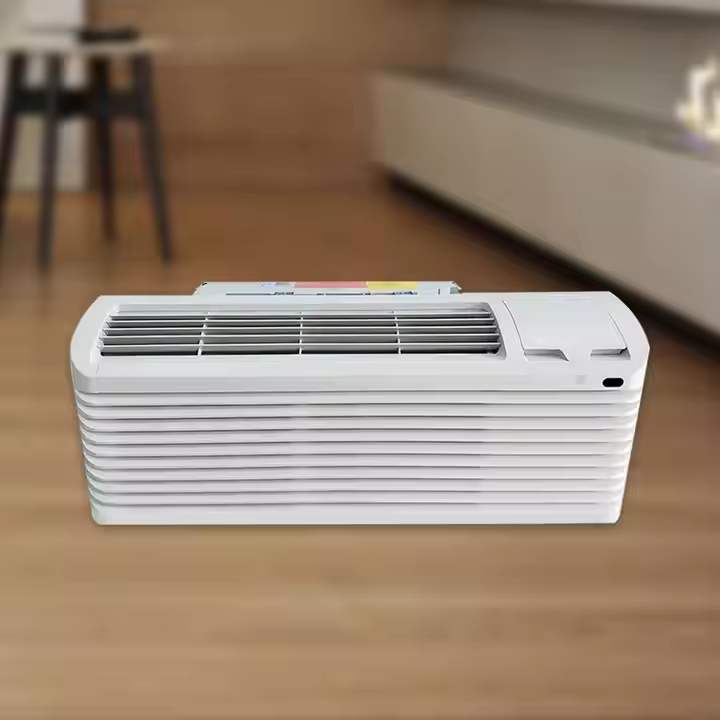
Energy efficiency isn’t the most glamorous topic, but when you’re running dozens of PTAC units across a hotel or apartment building, it becomes a very real financial consideration. Understanding how efficient these systems actually are, and what affects their performance, can make a meaningful difference to your energy bills over time.
How Is PTAC Efficiency Measured?
The main rating to look for is the EER, which stands for Energy Efficiency Ratio. It measures how much cooling output a unit delivers per watt of electricity consumed. The higher the EER, the more efficiently the unit operates.
Most modern air conditioner PTAC units carry an EER rating somewhere between 9 and 12. Units with an EER of 10 or above are generally considered solid performers. When you’re comparing models, this number is one of the most useful figures to pay attention to.
Are PTAC Units Compared to Other Systems?
Honestly, they sit somewhere in the middle of the pack. A high-quality ductless mini split will typically outperform a PTAC unit on efficiency, sometimes quite significantly. However, PTAC units hold their own when you factor in the practical advantages they offer at scale.
Central HVAC systems condition air for an entire building regardless of occupancy, which is inherently wasteful in properties where rooms aren’t always occupied. An air conditioner only runs when someone needs it, which in a hotel setting can actually work in its favour.
What Affects PTAC Energy Consumption?
Several factors influence how much electricity a PTAC unit draws:
- Room size and insulation. A unit that’s undersized for a room will run constantly trying to reach the set temperature. Poor insulation means the room loses conditioned air quickly, forcing the unit to work harder.
- Filter and coil cleanliness. A dirty filter is one of the biggest efficiency killers. When airflow is restricted, the system compensates by running longer cycles. Keeping filters clean is the single easiest way to maintain efficiency.
- Thermostat settings. Large temperature swings, like cranking the unit up to maximum and then switching it off, use more energy than maintaining a steady, moderate temperature.
- Age of the unit. Older AC PTAC units simply aren’t as efficient as newer models. If you’re running units that are ten years or older, upgrading to current models with better EER ratings is likely to pay for itself over time.
Practical Ways to Improve Efficiency
- Set thermostats to a sensible default in unoccupied rooms rather than switching units off entirely
- Install occupancy sensors where possible to reduce unnecessary runtime
- Keep up with filter cleaning and coil maintenance consistently
- Check door and window seals in rooms to prevent conditioned air from escaping
- Choose replacement units with the highest EER rating your budget allows
PTAC Efficiency Best Practices Case Study (Reducing Cooling Energy Use)
An owner of a mid‑size hotel located in the southeastern United States noticed monthly energy costs creeping up even though their PTAC units servicing guest rooms were relatively new. With close to 100 rooms and variable occupancy, they knew PTAC units cycling on and off to condition rooms were driving their monthly utility bills up.
How they improved PTAC efficiency:
Recorded Baseline:
First, they measured existing EER levels on every PTAC unit and documented how it compared to rated EER provided by the manufacturer. Previous utility bills were also examined to see overall kWh consumption during summer months.
Maintained PTAC units:
Filters were cleaned/replaced and coils were inspected and cleaned. Restricted airflow due to dirty filters/coils can decrease airflow and impact efficiency.
Implemented conservative thermostat settings for occupied rooms:
Instead of giving guests complete freedom on thermostat settings (e.g., blasting AC and heating full blast), the hotel now recommends a reasonable temperature range and trained housekeeping staff to reset the PTAC unit when the room turns vacant.
Reduced air leakage in guest rooms:
- Door sweeps were added/adjusted and window seals were inspected to prevent conditioned air from escaping rooms.
- Replaced older PTAC units with higher EER equivalents:
- When possible, older PTAC units were replaced one-by-one with newer units rated 11–12 EER. New units are more energy efficient compared to legacy units (usually have EER < 10).
Results
- Facilitywide cooling energy consumption went down by about 12 % during the first cooling season after changes were made — all while maintaining guest comfort.
- PTAC units with higher EER ratings showed significantly less kWh usage on a per cooling cycle basis.
- The hotel realized a return on investment after 18 months through energy savings and preventative maintenance cost reductions.
Did you know? Conducting routine preventive maintenance on Packaged Terminal Air Conditioners units and upgrading to units with higher‑efficiency ratings (higher EER) can lead to energy savings, especially when there are a large number of units in a building. (Compiled from various industry PTAC energy usage reports)
Link: Here is a good resource that goes into detail on the energy analysis of PTAC units — https://aetinc.biz/index.php/download_file/view/276/275/
Energy Efficiency FAQ — PTAC Units/Clima Units
1. How does PTAC EER work and why should I care?
ENERGY EFFICIENCY RATIO (EER) tells you how efficiently a PTAC cooling unit will operate. The higher the EER rating, the less electricity it takes to operate your Packaged Terminal Air Conditioners unit.
2. Are PTAC AC units energy efficient?
PTAC cooling units can be more or less energy efficient than other cooling systems. Ductless mini‑split systems are typically more energy efficient than Packaged Terminal Air Conditioners. However, PTAC can out‑perform central air solutions for cooling individual rooms.
3. Will a PTAC unit run inefficiently if the room is too big?
If a room is too big for the cooling capacity of the Packaged Terminal Air Conditioners unit, it will have to run longer to reach desired temperature thus using more energy. Don’t oversize or undersize PTAC units.
4. Does cleaning Packaged Terminal Air Conditioners filters make the unit more efficient?
Yes! When airflow is restricted because of dirty filters the fan and compressor has to work harder and run longer to maintain the desired temperature.
5. Will cranking up my PTAC thermostat impact the energy bill?
Certainly. Constantly changing the thermostat and setting extreme temperatures will cause the PTAC unit to run more frequently. Your PTAC will utilize less energy by maintaining a steady temperature.
6. Is it worth it to replace old PTAC units?
Older PTAC AC units were made with lower EER ratings than what are currently available. Newer models have a higher EER rating which can translate to energy savings.
7. What are some ways to improve my PTAC efficiency?
- Educate occupants on efficient PTAC thermostat usage
- Clean filters regularly
- Keep coils clean
- Repair door/window seals
- Install new PTAC units with higher EER ratings
8. Are PTAC units a waste of energy?
Not necessarily. PTACs can provide efficient cooling and heating as long as they are properly maintained and used efficiently.
The Bottom Line
Packaged Terminal Air Conditioners units aren’t the most efficient climate control option available, but managed properly they’re far from wasteful. A bit of routine maintenance and sensible temperature management goes a long way towards keeping running costs under control.