26 Nov
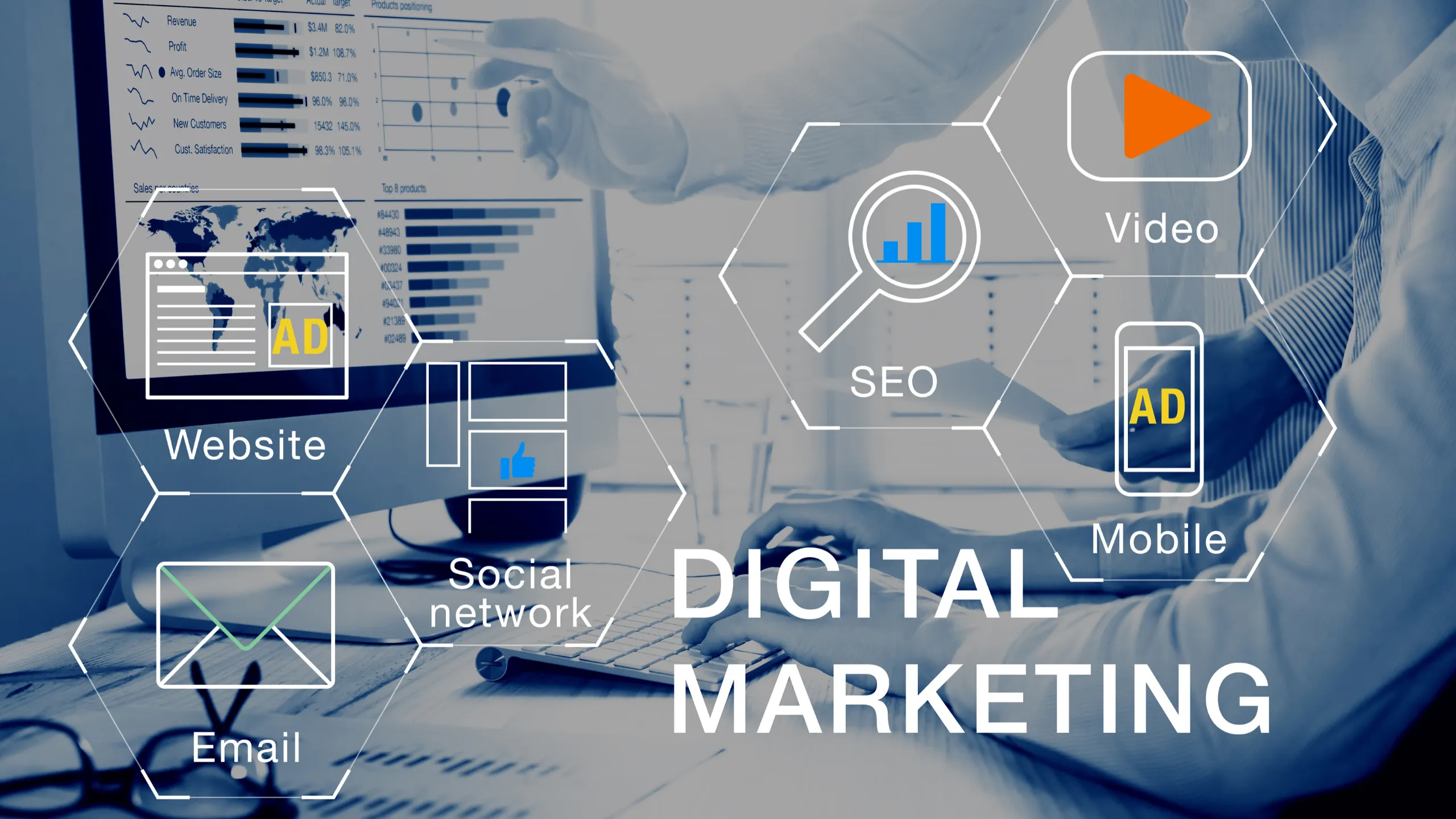
Artificial intelligence has moved from buzzword to backbone in marketing. Studies show that more than 90% of marketing leaders now see AI as the main driver of innovation, and a majority of companies have already woven generative AI into their strategies – with most planning to increase investment through 2026. At the same time, everyday tools like chatbots, AI copywriters and site-optimisation agents are quietly reshaping how brands design websites, run campaigns and serve customers online.
In this new landscape, working with a thoughtful digital marketing agency and a capable website design agency is less about outsourcing tasks and more about building the kind of digital foundation that AI can amplify instead of expose.
When your website design works against you
A website that looks “fine” on a laptop but is slow or confusing on mobile is no longer a minor annoyance – it’s a revenue leak. Research suggests that:
- Around 57% of users will not recommend a business with a poorly designed mobile site.
- Nearly 40% of people only engage with websites that feel visually appealing and easy to use.
- Over half of mobile users abandon a page if it takes more than three seconds to load.
Poor usability drives higher bounce rates, shorter sessions and fewer conversions – all signals that search engines and AI-driven recommendation systems use to decide whether to surface your pages at all.
A strong website design agency now has to think beyond layout. It needs to understand UX, accessibility, mobile performance, Core Web Vitals and how these factors intersect with SEO and paid traffic. If your homepage or landing pages don’t convert, no amount of clever advertising will fix the underlying friction.
When digital marketing doesn’t hit the target
Digital campaigns that “run” but don’t resonate create a different set of problems:
- Budgets disappear into impressions and clicks without meaningful enquiries or sales.
- Audiences see generic messages that don’t reflect their context, needs or stage in the journey.
- Teams drown in metrics but lack a clear narrative of what’s working and what isn’t.
Meanwhile, AI is enabling better-performing brands to iterate creative concepts faster, test dozens of audience combinations and personalise messaging at scale. Some B2B marketers report automating up to 80% of production tasks with AI tools, freeing humans to focus on strategy and higher-level creativity.
A good digital marketing agency doesn’t just plug in AI and hope for the best; it uses AI to accelerate research, creative testing and optimisation while keeping humans in charge of insight and brand tone.
Local versus national: the competition just intensified
The rise of AI-powered platforms has flattened the playing field in one sense: local businesses can theoretically access the same tools as national brands. But in practice, larger players often adopt them earlier, with teams dedicated to performance, CRO and data science.
For a local retailer, clinic, law firm or manufacturer, that means:
- You are compared side-by-side with national names in search results and social feeds.
- Younger audiences expect the same speed, polish and personalisation wherever they go online.
- If your digital experience feels clunky or outdated, customers assume the business behind it might be too.
AI has raised the standard of what “normal” looks like. Competing effectively now requires the kind of joined-up thinking that a capable website design agency and digital marketing agency can provide together.
The cost of having no AI focus
Ignoring AI doesn’t keep you “safe”; it quietly places you behind. Surveys suggest that close to nine in ten marketers now use AI in their day-to-day work, yet adoption is lower among smaller organisations – creating a widening gap between those who experiment and those who hesitate.
Brands with no AI focus tend to struggle with:
- Manual, slow content production while competitors scale output and testing.
- Incomplete insight because they’re not using AI to surface patterns in customer behaviour.
- Lower visibility in AI-assisted search and recommendation tools, which lean towards fast, relevant and trustworthy sites.
At the opposite end of the spectrum, agencies like Trident, Go Fish Digital are launching AI digital marketing packages that unify data and performance marketing into a single, AI-enhanced stack – a sign of where the industry is heading.
Web and marketing requirements in 2026
By 2026, “good enough” digital will likely share a few characteristics:
- Mobile-first UX – with most web traffic now coming from mobile devices, sites must be designed primarily for small screens, with intuitive navigation and clear calls-to-action.
- Fast, resilient performance – consistent sub-three-second load times, optimised images and code, and ongoing monitoring of real-user performance data.
- Composable, AI-aware content – structured headings, schema and on-page content that AI assistants can easily interpret and quote, not just traditional search engines.
- AI-assisted campaigns – using AI for audience discovery, creative variation, budget allocation and attribution, while humans set the strategy and guardrails.
- Ethical, first-party data use – building direct relationships through email, communities and customer portals, rather than relying solely on third-party data that is steadily disappearing.
A modern website design agency and digital marketing agency need to collaborate across all five, not operate in silos.
Where digitalisation actually helps
Digitalisation often sounds abstract, but its benefits show up in very concrete scenarios:
- Service-led businesses – online booking, automated reminders and AI-powered FAQs reduce admin time and improve customer experience.
- E-commerce and retail – personalised product recommendations, abandoned-cart journeys and performance-optimised checkout flows lift average order values and conversion rates.
- B2B companies – targeted content, account-based advertising and AI-scored leads help sales teams focus on the most promising opportunities.
- Content-heavy organisations – AI helps repurpose webinars into articles, posts and email sequences, while humans refine the narrative and brand voice.
In each case, technology reduces friction and surfaces insight – but it still needs a strategy and a coherent brand built on top.
Why agencies still matter in an AI-first era
As AI tools get more powerful and accessible, the temptation is to see them as a replacement for specialist support. Yet the most successful marketers treat AI as an amplifier: it speeds up production, sharpens targeting and reveals new patterns, while humans provide judgement, creativity and context.
That’s where a well-rounded digital marketing agency and website design agency come in. They can:
- Translate business goals into coherent digital journeys.
- Design websites that work beautifully for humans and machines.
- Use AI thoughtfully, with clear guardrails, rather than chasing every shiny tool.
The question for most businesses now isn’t whether to use AI, but how to combine it with strong design, rigorous strategy and a clear brand story. Partnering with the right creative and digital team turns that question from an anxiety into an opportunity.