
As summer temperatures soar, finding an effective and convenient way to stay cool becomes essential. While traditional air conditioning systems offer cooling solutions, portable air conditioners have become a popular and practical choice for many. With their easy mobility, simple installation, and energy-efficient operation, portable air conditioners provide a level of comfort that traditional systems can’t always match. In this article, we will delve into the benefits, features, and considerations to help you make an informed decision when choosing a portable air conditioner for your home or office.
What Exactly is a Portable Air Conditioner?
A portable air conditioner is a self-contained cooling unit designed to be movable from one space to another, without the need for installation or modifications to the home. Unlike traditional air conditioners, which require either wall or window installation, a portable unit offers the flexibility to cool any room with minimal setup.
These units work by drawing in warm air from the room, passing it through a cooling system, and then expelling the cooled air back into the space. The hot air is then vented outside through an exhaust hose, typically connected to a window. Many portable air conditioners also feature dehumidifiers to eliminate excess moisture in the air, adding an extra layer of comfort.
Read more article: What to Do During a Power Outage: A Step-by-Step Guide to Using Your Generator for Home
The Benefits of Using a Portable Air Conditioner
Flexibility and Mobility
One of the most appealing features of portable air conditioners is their portability. These units can be moved easily from room to room, allowing you to cool specific areas of your home or office as needed. Whether you’re working in the living room or relaxing in the bedroom, a portable air conditioner lets you enjoy cooling wherever you are.
Simple Setup and Installation
Unlike traditional window units, which can be difficult to install and may require professional help, portable air conditioners are easy to set up. Most units come with a window venting kit that allows for quick installation. You won’t need to drill holes or modify your home in any way, making portable air conditioners an excellent option for renters and those in temporary living situations.
Energy Efficiency
Portable air conditioners are generally more energy-efficient than other cooling methods, such as central air conditioning or window units. Since they are designed to cool specific rooms, you won’t waste energy cooling unused areas of your home. Many models also feature energy-saving modes, timers, and sleep functions to help reduce energy consumption and save you money on your electricity bills.
Cost-Effective Option
When compared to the cost of installing a central air conditioning system, portable air conditioners are a much more affordable choice. They don’t require expensive installation or permanent fixtures. Additionally, their energy efficiency helps lower long-term utility costs, making them a cost-effective solution for those on a budget.
Ideal for Small Spaces
If you live in a small apartment, dorm room, or office, a portable air conditioner can be the perfect cooling solution. These units are compact and designed to fit into smaller spaces while still providing powerful cooling performance. Whether it’s a tiny bedroom or a cramped office, a portable air conditioner can effectively cool your area without taking up too much space.
How Do Portable Air Conditioners Work?
Understanding how a portable air conditioner works can help you make a more informed purchase. These units operate using the basic principles of refrigeration. Here’s a breakdown of the process:
- Intake of Warm Air: The portable air conditioner draws in warm air from the room through the intake vents.
- Cooling Process: This warm air then passes through an evaporator coil filled with refrigerant. As the air flows over the coils, it cools down.
- Exhausting Warm Air: The now-cooled air is blown back into the room, creating a comfortable temperature. Simultaneously, the warm air from the room is expelled through an exhaust hose, which is vented out of a window or door.
- Dehumidification: As the air cools, moisture condenses and is collected in a water tank or drained out through a hose, depending on the model.
This cycle repeats itself, continuously cooling the air while removing excess humidity, making your living or working environment more comfortable.
Key Features to Look for in a Portable Air Conditioner
When purchasing a portable air conditioner, there are several important features to consider to ensure you choose the best model for your needs. These include:
Cooling Capacity (BTU Rating)
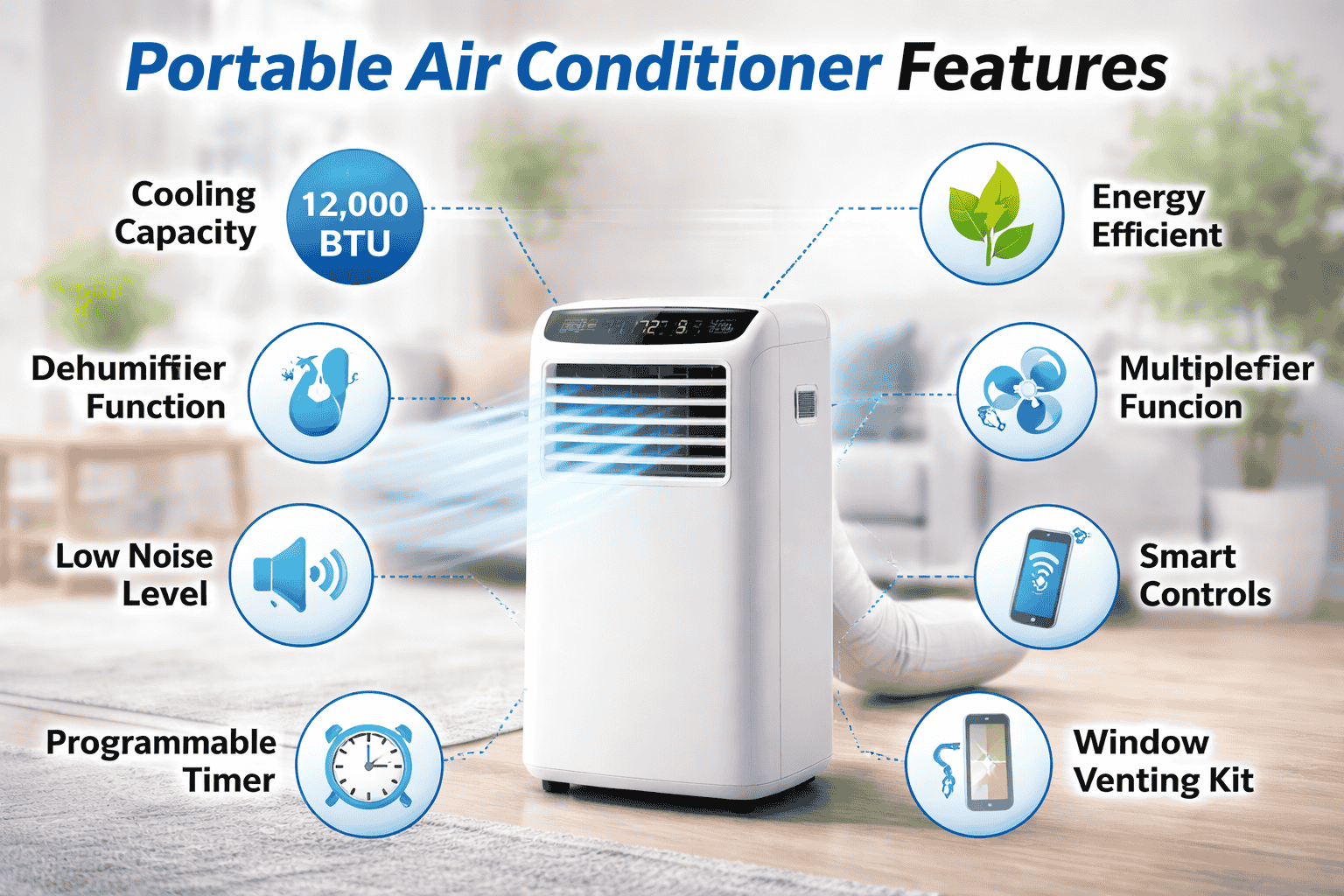
The cooling power of a portable air conditioner is measured in British Thermal Units (BTUs). The higher the BTU rating, the larger the space the unit can effectively cool. For smaller rooms (up to 200 square feet), a unit with an 8,000 to 10,000 BTU rating is usually sufficient. For larger rooms or open-concept spaces, you may need a unit with a higher BTU rating (12,000 to 14,000 BTUs or more).
Noise Level
Noise can be a concern when using portable air conditioners, especially if you plan to use them in a bedroom or quiet space. While older models were known for being noisy, modern portable air conditioners are much quieter. Look for models specifically designed with noise-reduction features, such as insulated panels and quieter fan motors.
Dehumidification Features
If you live in a humid climate, it’s essential to choose a portable air conditioner with a built-in dehumidifier. These units help remove moisture from the air, making the space feel cooler and more comfortable. Some models allow for continuous drainage of the moisture, while others require periodic tank emptying.
Energy Efficiency
Look for an energy-efficient portable air conditioner that can help you lower your utility bills. Units that are Energy Star certified meet strict energy efficiency standards, ensuring you’re not wasting electricity. Additionally, features like programmable timers, eco-friendly modes, and sleep settings can further reduce energy consumption.
Ease of Installation and Maintenance
A simple installation process is one of the biggest advantages of portable air conditioners. Most units come with an easy-to-follow installation kit that includes a window adapter, hose, and necessary hardware. Additionally, consider the ease of cleaning and maintaining the unit. Some portable air conditioners have washable filters or self-evaporating systems that reduce the need for frequent maintenance.
Common Misconceptions About Portable Air Conditioners
They Aren’t Effective for Large Spaces
While it’s true that portable air conditioners may not be as powerful as central air systems, they are still effective for cooling medium to small-sized rooms. For larger spaces, you may need a more powerful model with a higher BTU rating.
They Are Too Noisy
Many people believe portable air conditioners are loud, but newer models are much quieter than their predecessors. Look for models that advertise low noise levels if quiet operation is a priority for you.
They Are Difficult to Install
Installing a portable air conditioner is typically very straightforward. Most models come with a window kit that makes the installation process quick and easy. No permanent modifications or professional installation are required, making them a great choice for renters or temporary living situations.
Conclusion
A portable air conditioner is an excellent option for staying cool, especially if you live in a small space or need a flexible cooling solution. With their easy installation, mobility, and energy-efficient operation, portable air conditioners offer significant advantages over traditional cooling systems. By considering the features that matter most to you—such as cooling capacity, noise level, and energy efficiency—you can find the perfect portable air conditioner to meet your needs and enjoy a more comfortable living or working environment.
About the Author